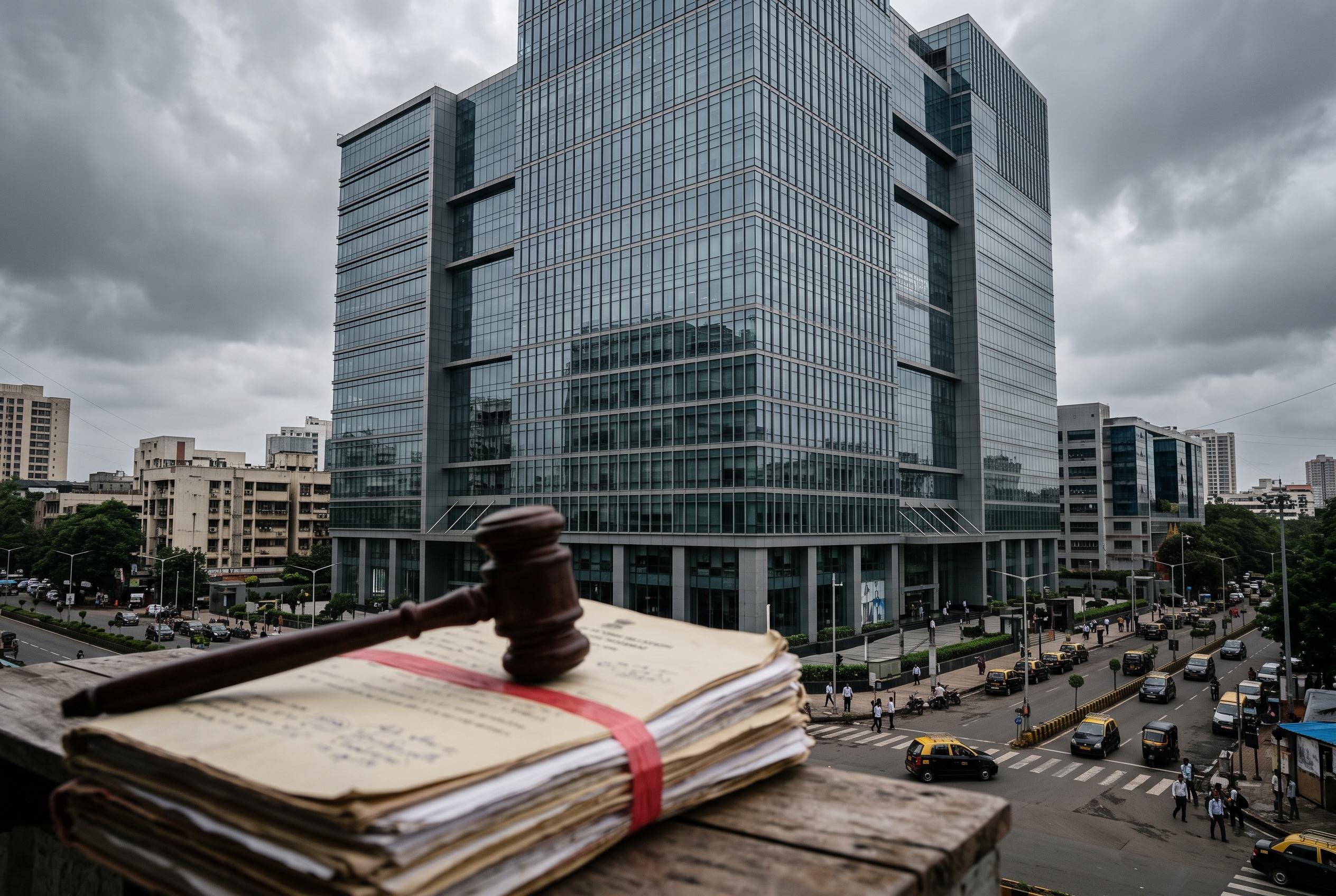

The Bombay High Court has mandated the State Bank of India to pay Rs 5,000 daily from December 2023 until it reconstructs lost property title papers for a Mumbai firm, highlighting the enforcement of recent RBI rules on document retention and borrower protections.
The Bombay High Court has ordered State Bank of India to pay a Mumbai partnership firm compensation of Rs 5,000 a day from 1 December 2023 until it completes the reconstruction of lost title papers for two commercial properties, turning an RBI customer-protection rule into a direct court-enforced penalty. The ruling, delivered on 2 September 2026 in a petition brought by M/s In Vogue Creations through its partner Achala Sudhakar Joshi, gives the bank 12 weeks to finish the exercise. (indiankanoon.org)
According to the judgment, the firm had lodged original deeds in 1979 with SBI’s Dadar commercial branch as security for credit facilities against premises in Prabhadevi and a plot at Taloja MIDC. The loans were fully repaid on 28 August 2003, but the documents were not returned. SBI later issued a No Dues/No Claims Certificate dated 27 July 2023 and then, in letters dated 5 and 7 December 2023 and 15 March 2024, acknowledged that the originals could not be traced. Court records say Joshi’s firm wanted to deal with the properties, but the missing papers disrupted any sale or transfer. (lawlens.in)
SBI told the court that the borrower had waited more than 15 years to ask for the documents and said the branch had since shifted premises. The judges rejected that defence in emphatic terms, saying responsibility for preserving, retrieving and returning title deeds rested entirely with the lender. In a passage likely to be closely read by banks, the bench said the duty to return the papers “cannot depend upon the borrower reminding the Bank to perform that obligation”. The court also noted that the petitioner had nothing to do with changes in branch premises, internal transfers of records or staff movement. (indiankanoon.org)
The bank also argued that a Banking Ombudsman advisory recommending Rs 1 lakh in compensation should end the matter, and that the RBI circular could not be used to calculate damages all the way back to 2003. The court agreed only in part. It held that the circular was not retrospective to the date of repayment, but said it plainly applied once release of the documents fell due on or after 1 December 2023. That meant SBI must pay the daily amount from that date onwards, with the Rs 1 lakh already deposited to be adjusted against the final sum. (indiankanoon.org)
The wider importance of the case lies in the RBI’s circular of 13 September 2023, issued after the regulator said lenders were following divergent practices that had led to grievances and disputes. The rules require banks, non-bank lenders and housing finance companies to return original movable or immovable property documents within 30 days of full repayment or settlement, and to remove any registered charge in the same period. They also give borrowers the option of collecting documents from the servicing branch or another office where the papers are held. Legal commentary published when the rules came out said lenders must now spell out the timeline and place of return in sanction letters and keep a published process for handing documents to legal heirs if a borrower dies. (pdicai.org)
The same framework is particularly strict where papers are lost. The RBI says the lender must help secure duplicate or certified copies at its own cost and explain any delay attributable to it. In those cases, the institution gets an extra 30 days to complete the replacement process, after which the Rs 5,000-a-day penalty starts running. In Joshi’s case, the High Court directed SBI not merely to obtain copies, but to rebuild the title record with whatever endorsements, declarations, affidavits, indemnities and other supporting material may be required by authorities, the co-operative society or any future transferee. (indiankanoon.org)
The judgment also lands against a broader backlog. Business Standard reported in August 2025 that the finance ministry had pressed public-sector banks to speed up release of property papers after repayment, calling their conduct “unsatisfactory”. According to an official cited by the newspaper, the stock of pending cases at state-run lenders had fallen from 29,500 in August 2024 to 20,800 in February 2025, but SBI alone still accounted for about 18,000 cases, with Bank of Baroda at around 1,000. A senior banking executive told the paper the delays raised legal and reputational risks as well as the prospect of regulatory penalties. (business-standard.com)
By tying SBI’s liability to the RBI’s prescribed daily rate, the Bombay ruling goes further than a finding of mere negligence. The court said the regulator’s figure was an “objective and rational measure” of the harm caused when a bank fails in its duty over original property documents, and stressed that the compensation under the circular is without prejudice to any other legal remedy a borrower may pursue. For lenders still treating the return of deeds as an administrative afterthought, that is the warning embedded in this case. (indiankanoon.org)
Disclaimer: This article is intended to inform and educate, not to recommend or endorse any financial product, investment or strategy. Please consider your own financial circumstances and seek professional advice where appropriate before making financial decisions.