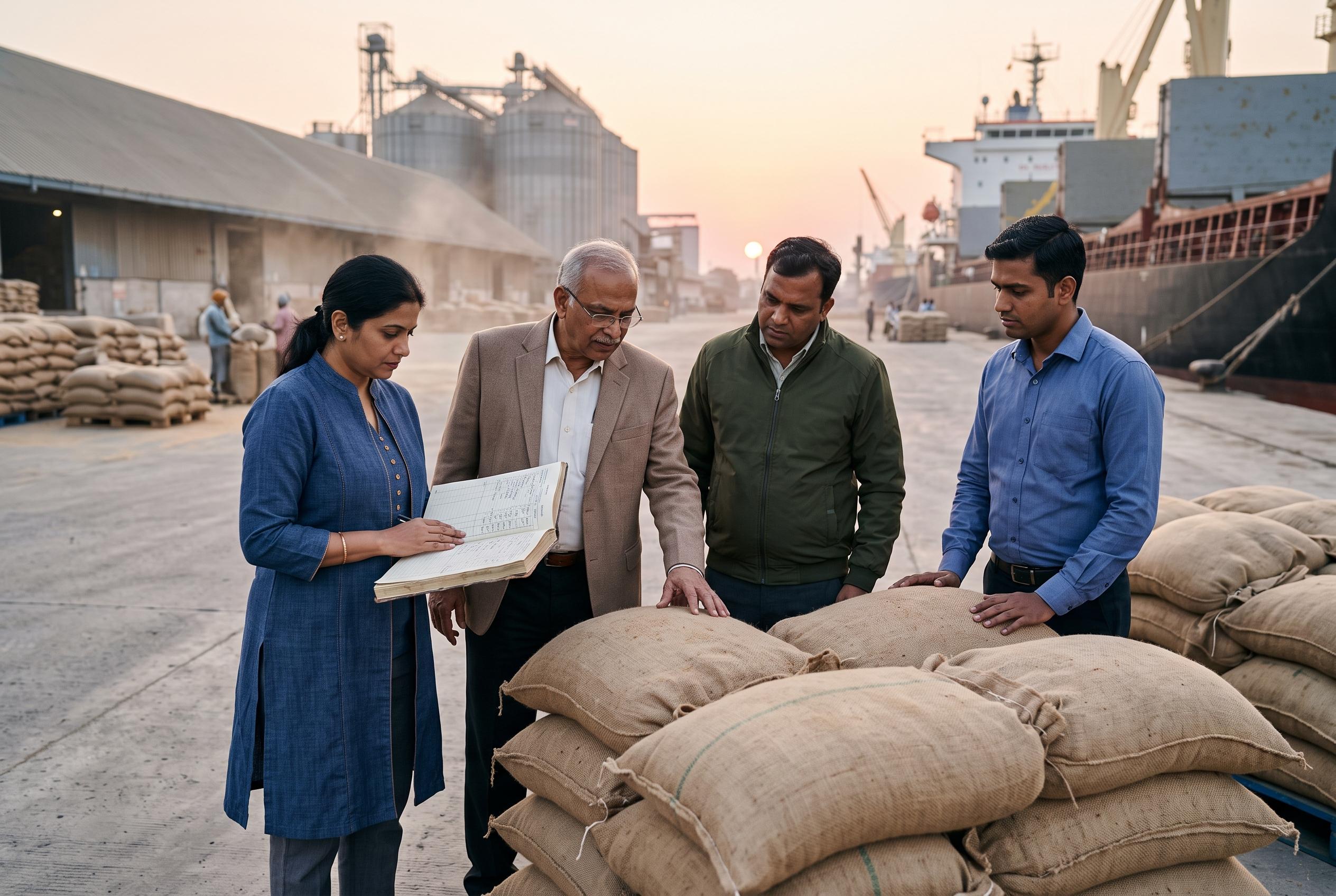

India has relaxed its wheat flour export policy after years of tight controls, indicating improved domestic supply conditions and a shift towards market liberalisation amid rising stocks and stable prices.
India has moved wheat flour and several related products back into the “free” export category, a significant shift after years of tighter controls aimed at protecting domestic supply. The Directorate General of Foreign Trade issued the change on Monday, reversing the earlier prohibition on wheat flour exports and covering atta, maida, semolina, wholemeal atta and resultant atta. The move marks a clear loosening of a policy that was tightened in 2022, when the government began restricting wheat shipments as global markets were disrupted by the Russia-Ukraine war and local prices climbed.
The original curbs were introduced to safeguard food security in a country of more than 1.4 billion people and to cool rising prices at home. Wheat exports were moved from “free” to “prohibited” in May 2022, and the restriction was extended to wheat flour in August that year. Even so, the government has over time allowed limited exceptions for certain wheat products, reflecting a balancing act between domestic needs and the interests of exporters and farmers.
Recent policy changes suggest that officials had already started easing the framework before this latest step. According to Livemint, in January 2026 the government allowed limited exports of wheat flour and related products under a tightly controlled authorisation system, with a ceiling of 5 lakh metric tonnes and strict eligibility rules. Separate summaries indicate that in February 2026 the Directorate General of Foreign Trade approved an additional 5 lakh metric tonnes of wheat-flour products, while the broader policy status still remained prohibited.
The wheat market has also seen a wider relaxation this year. Reuters reported in earlier government statements that higher stock levels, softer prices and expectations of stronger production were behind the decision to permit 25 lakh metric tonnes of wheat exports and 5 lakh metric tonnes of wheat products, in order to support price stability and reduce pressure on farmers at harvest time. The latest move on wheat flour appears to extend that easing further, suggesting New Delhi is increasingly confident about supply conditions at home.
Disclaimer: This article is intended to inform and educate, not to recommend or endorse any financial product, investment or strategy. Please consider your own financial circumstances and seek professional advice where appropriate before making financial decisions.