

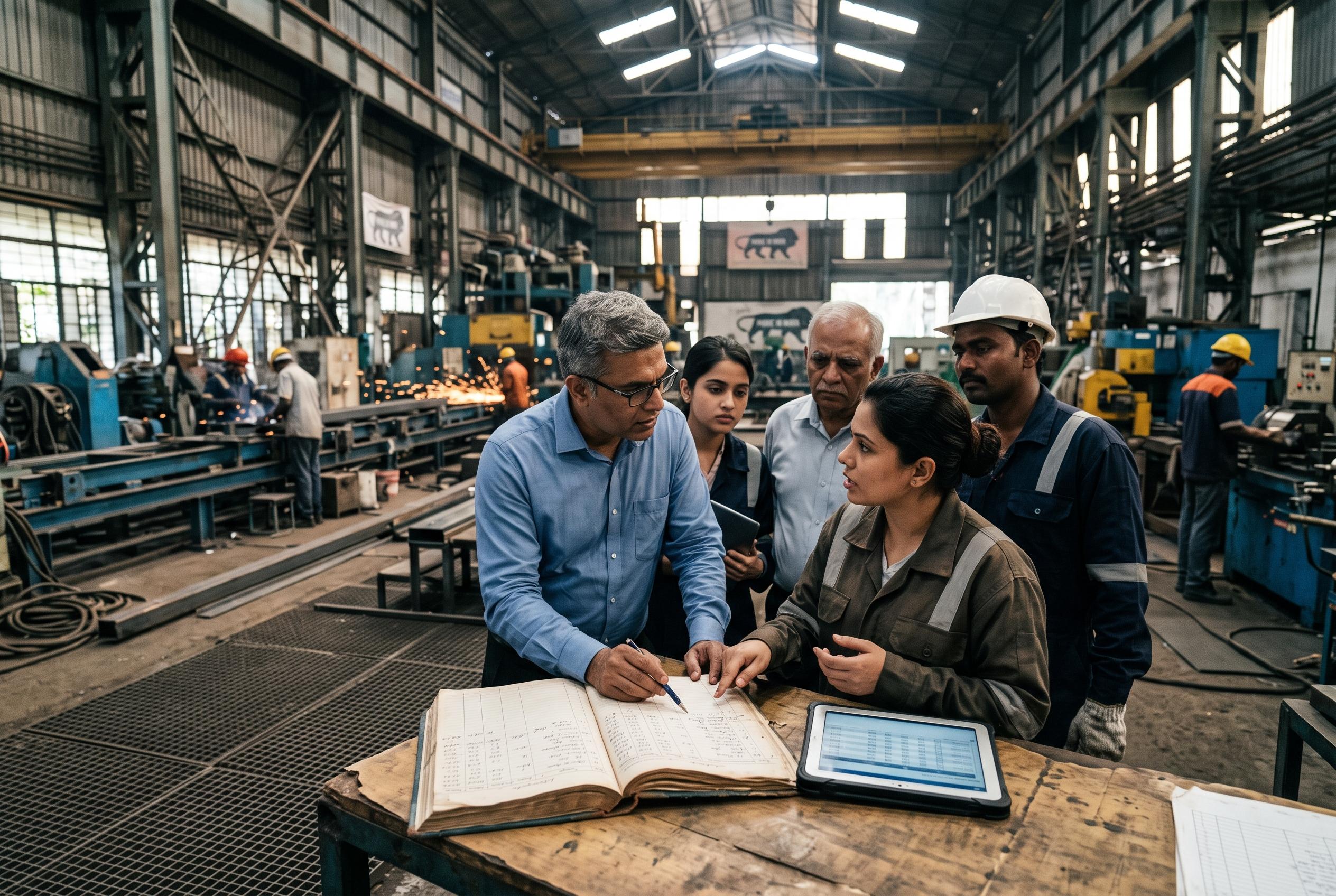

Debates over the reliability of India’s official manufacturing figures cast doubt on the progress of initiatives like Make in India, as analysts question key data discrepancies while the sector sees real investment and growth.
India’s manufacturing push sits at the intersection of two powerful forces: China’s expanding export machine and New Delhi’s ambition to build a larger industrial base. A recent analysis in The Indian Express notes that Beijing’s dominance in low-skill exports is putting pressure on poorer countries trying to climb the manufacturing ladder, while India has responded with flagship policies such as Make in India and the production-linked incentive scheme. Research from the Peterson Institute for International Economics suggests this “China squeeze” is not just a slogan but a structural problem, narrowing the space for labour-intensive industrialisation in developing economies.
That makes the question of how well Indian manufacturing has actually performed especially important. According to the Indian Express commentary, the answer depends on whether the official data can be trusted. The authors argue that the newer GDP series was meant to fix long-standing flaws in measuring manufacturing, but they say several features of the numbers still need explanation before confidence in the series can be fully restored.
One concern is the behaviour of the manufacturing price deflator, which in the new series shows nine straight quarters of negative movement between 2023 and 2025. The authors say that is hard to reconcile with the broader economy, where consumer prices did not point to sustained deflation. They also question the gap between real gross value added and the Index of Industrial Production, saying the former now implies manufacturing growth about twice as fast as the latter. In their view, the usual explanations do not quite hold, especially because informal-sector output has recently been proxied using formal-sector data.
A third issue is the weakening relationship between the two measures over time. Before the 2011-12 statistical changes, manufacturing GVA and industrial output moved closely together; since then, and particularly in the latest series, they have drifted apart. The authors say that does not by itself prove the new series is wrong, but it does mean economists need a clearer explanation of why the indicators now tell such different stories. That matters not only for statistical credibility, but also for judging whether Make in India and the PLI scheme are delivering the industrial revival they were meant to produce. Mint has reported that the PLI programme has already drawn more than ₹2.16 trillion in investment and generated sales of over ₹20.41 trillion across 14 sectors, suggesting there is real momentum beneath the measurement debate.
Disclaimer: This article is intended to inform and educate, not to recommend or endorse any financial product, investment or strategy. Please consider your own financial circumstances and seek professional advice where appropriate before making financial decisions.



