

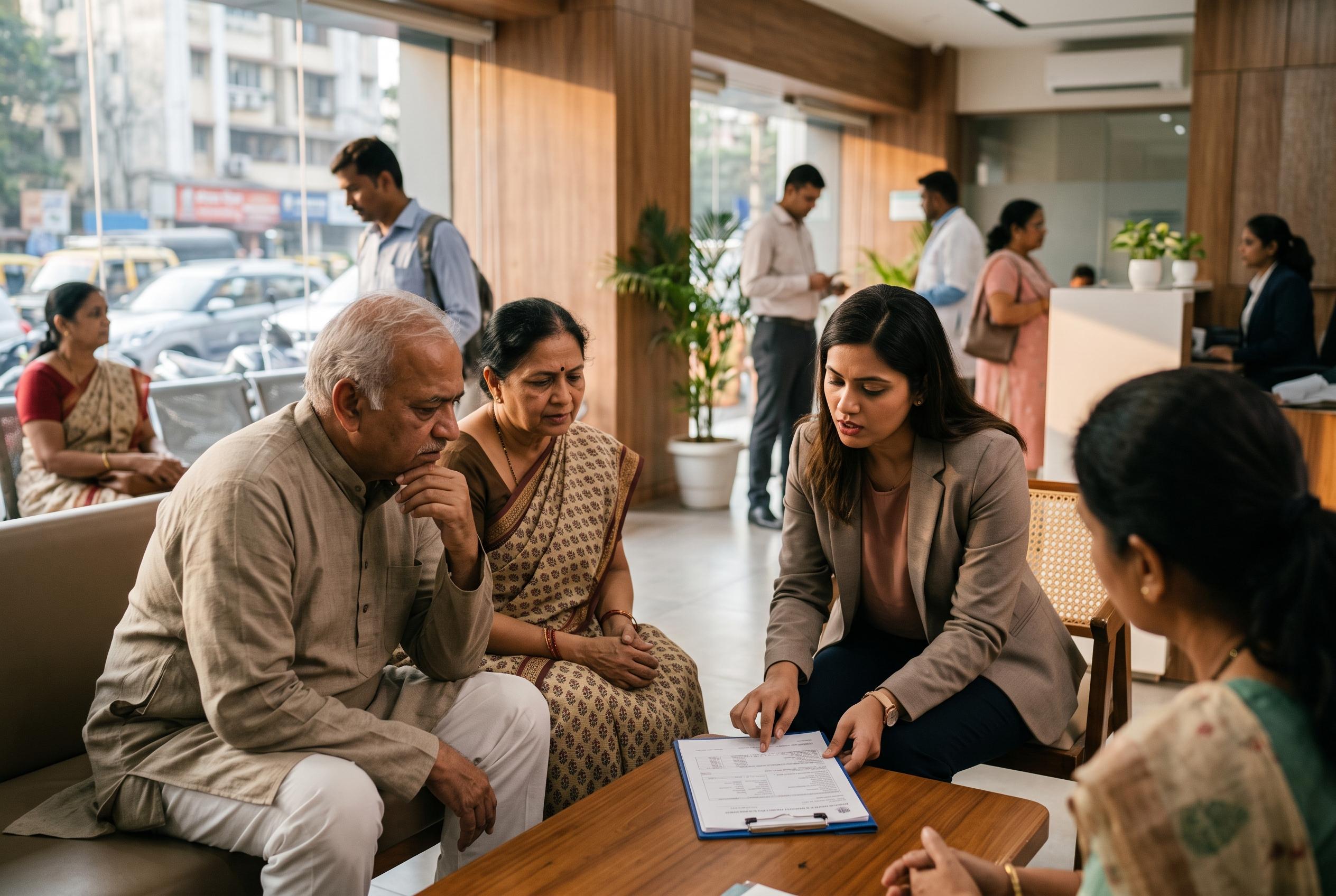

As healthcare expenses escalate with age and urbanisation, experts urge Indians to reconsider their insurance coverage, especially in major cities, to mitigate financial risks associated with ageing and chronic illnesses.
Health-care costs in India rise sharply with age, and a recent set of insurance figures shows just how fast the burden can grow. At around 25, the average medical claim is about ₹65,000, but by the time a person is past 60, that figure climbs to roughly ₹1.77 lakh. The numbers point to a simple but costly reality: as people get older, they are more likely to need hospital treatment, longer recovery periods and more complex care.
The pressure is not evenly spread across the country. Among major cities, Mumbai stands out as the most expensive place for treatment, with higher room charges, surgery bills and nursing costs than elsewhere. Delhi-NCR, Bengaluru and Chennai are also costly, while smaller cities tend to be less expensive. Even so, industry commentary suggests that the gap is narrowing as lifestyle-linked conditions such as diabetes, high blood pressure and heart disease become more common at younger ages.
That is why insurers and advisers increasingly stress the importance of holding enough cover rather than relying on a basic policy. Some guidance for 2026 suggests individual health insurance of ₹10 lakh to ₹15 lakh in metros, ₹7 lakh to ₹10 lakh in Tier 2 cities and ₹5 lakh to ₹7 lakh in smaller towns, with the warning that medical inflation of about 12% to 15% a year can quickly erode protection. Other analysts say a ₹5 lakh policy may no longer be adequate for many urban households, especially when hospital stays and procedures can run into several lakhs of rupees.
Some planners also argue that out-patient cover, which pays for doctor visits, tests and regular medicines, can be useful for families with chronic conditions or children who need frequent care. But such add-ons do not suit everyone, particularly if premiums are high or limits are low. The wider lesson is that insurance should be chosen with age, city and likely treatment costs in mind, because an underinsured family can see savings wiped out by one serious admission.
Disclaimer: This article is intended to inform and educate, not to recommend or endorse any financial product, investment or strategy. Please consider your own financial circumstances and seek professional advice where appropriate before making financial decisions.



